How to correct alternate parents in your genealogical data?
Last updated
Question:
How to correct alternate parents in your genealogical data?
Answer:
Correct the error in your genealogical source
Introduction:
Ancestry.com offers a comprehensive platform for researching and documenting ancestral information, including census and church records. This article provides clear guidance on managing parental data in the context of genetic genealogy, emphasizing the importance of accurately representing biological relationships.
Exporting Data:
To store and export your research findings, Ancestry.com offers the option to create a GEDCOM file. Follow these steps to export your tree:
- Navigate to "Tree Settings."
- Select "Tree Info."
- Click on "Export tree" on the right-hand side under "Manage your tree."
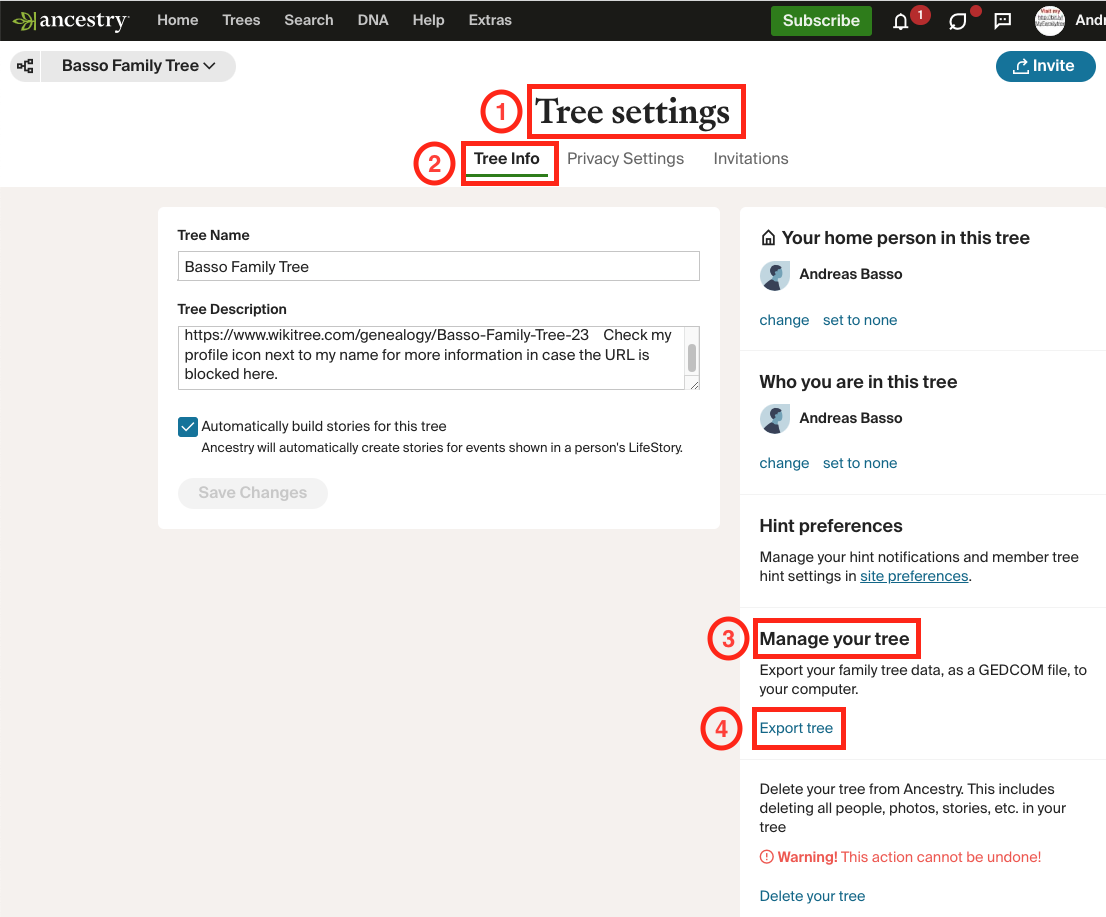
Please note that the user interface may evolve over time, so refer to Ancestry's official documentation for the most current instructions.
Genetic Genealogy Focus:
Genetic genealogy concentrates on identifying the biological parents of a child through DNA testing. At Ancestry.com (and potentially other platforms), you can encounter the concept of "Alternate Parents," which allows for multiple sets of parents.
If you're unsure about the biological parents of a child, you should rather document this information as text with the child but don't add multiple fathers or mothers to a child! If our app detects such data during the import of a GEDCOM file, it will flag it and list the names of the children with multiple parents.
Our app typically identifies the following scenarios of multiple parents:
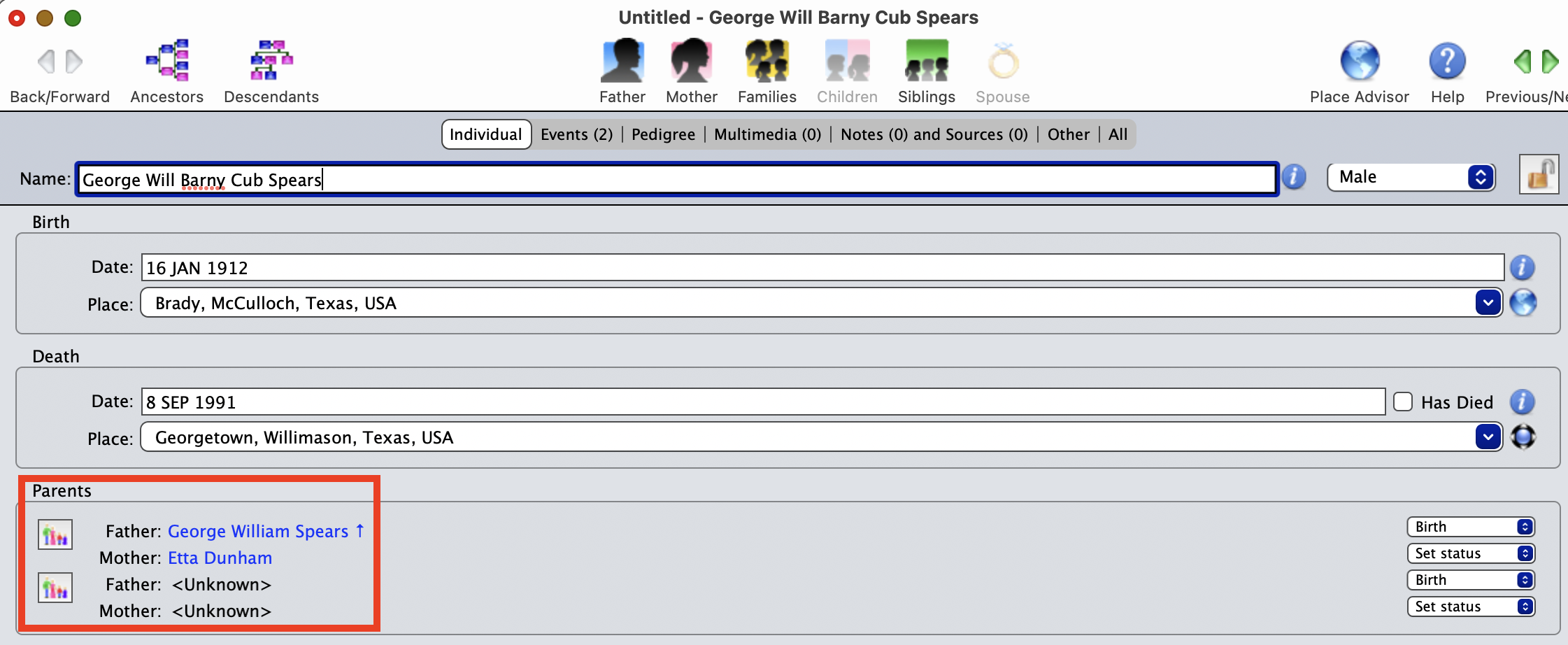
1) A 2nd Set of "Unknown" Parents:
When a second set of parents is labeled as "Unknown."
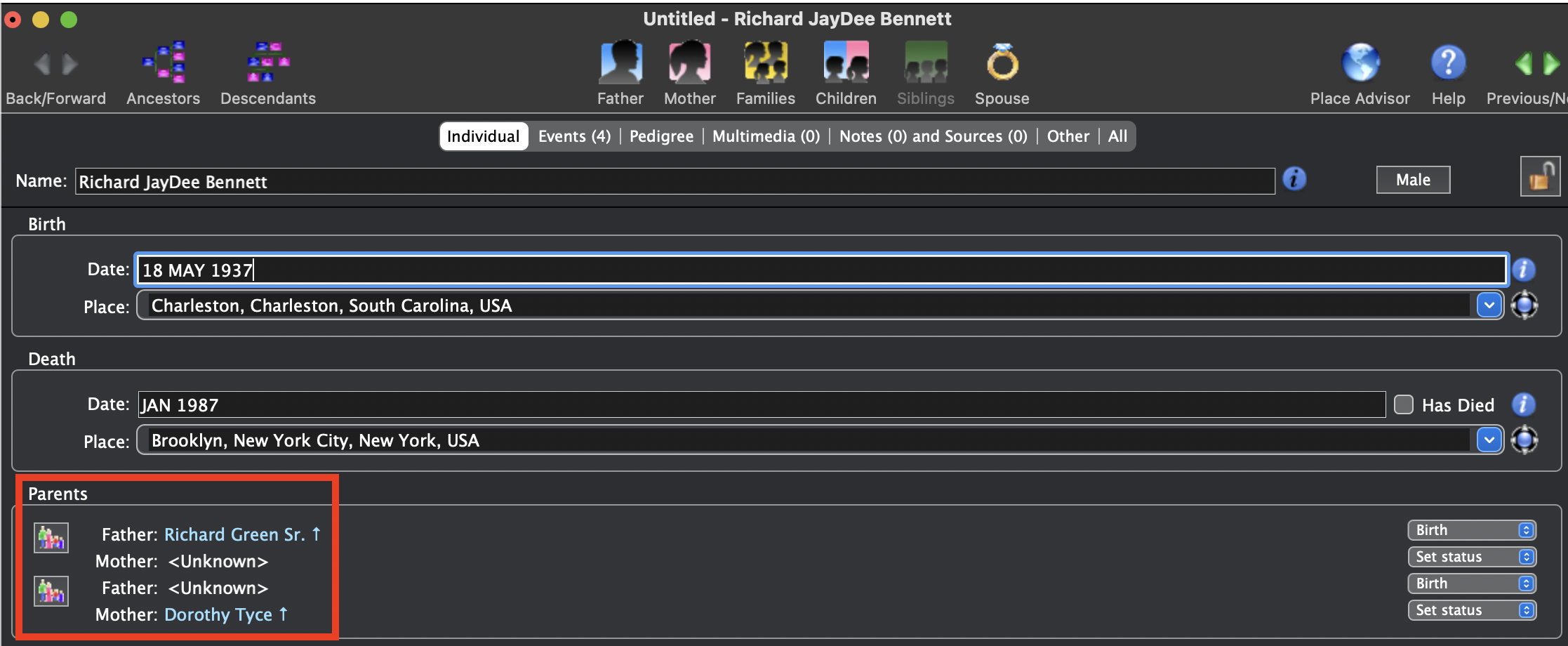
2) Mismatched "Married" Status:
Biological parents are "married" to "Unknown" individuals but not to each other.
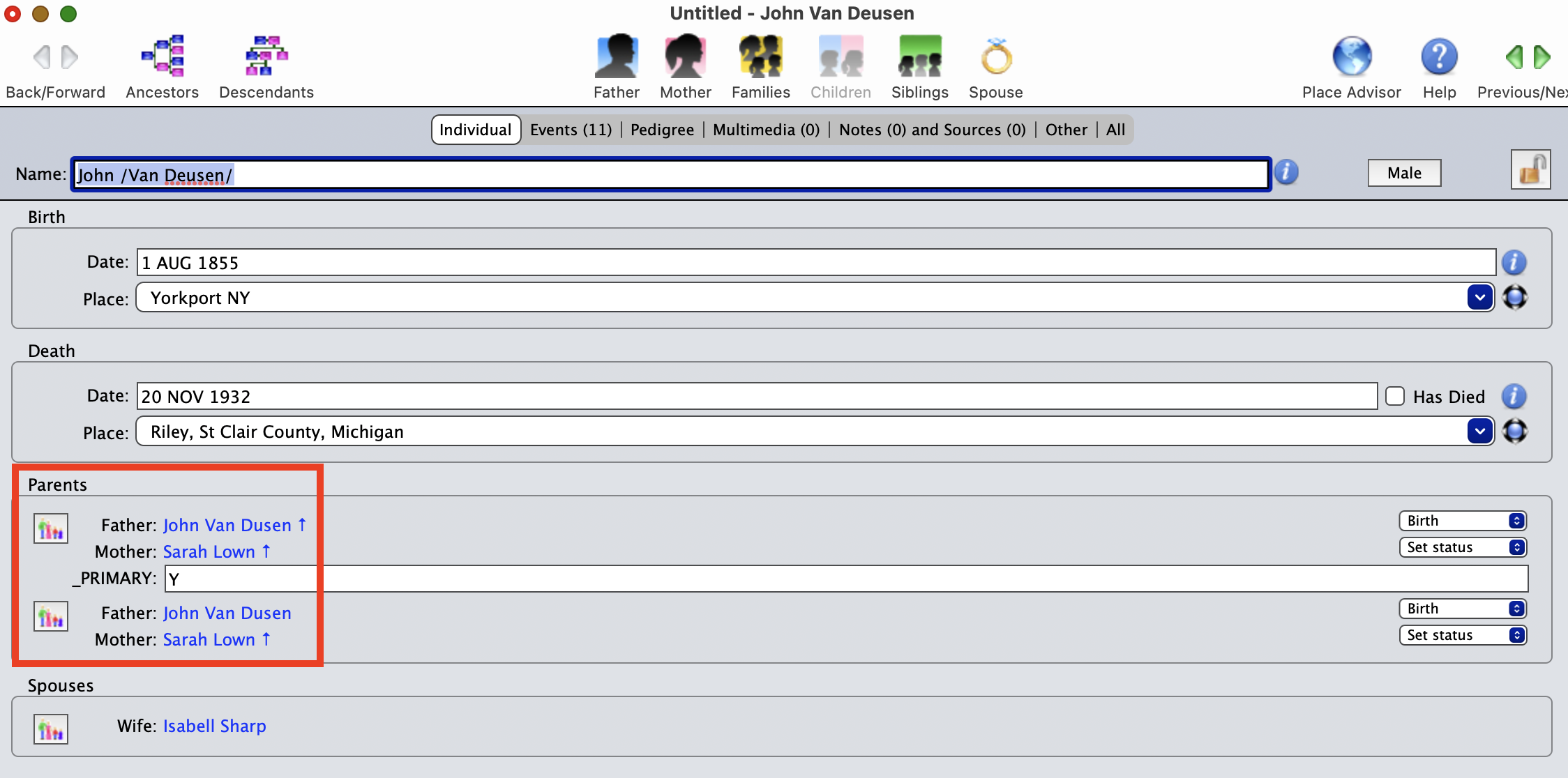
3) Duplicate Entry of Biological Parents:
Biological parents are entered twice for a child.
4) Child Attached to Multiple Families:
A parent has a second marriage to an "Unknown" person, and the child is connected to both families.
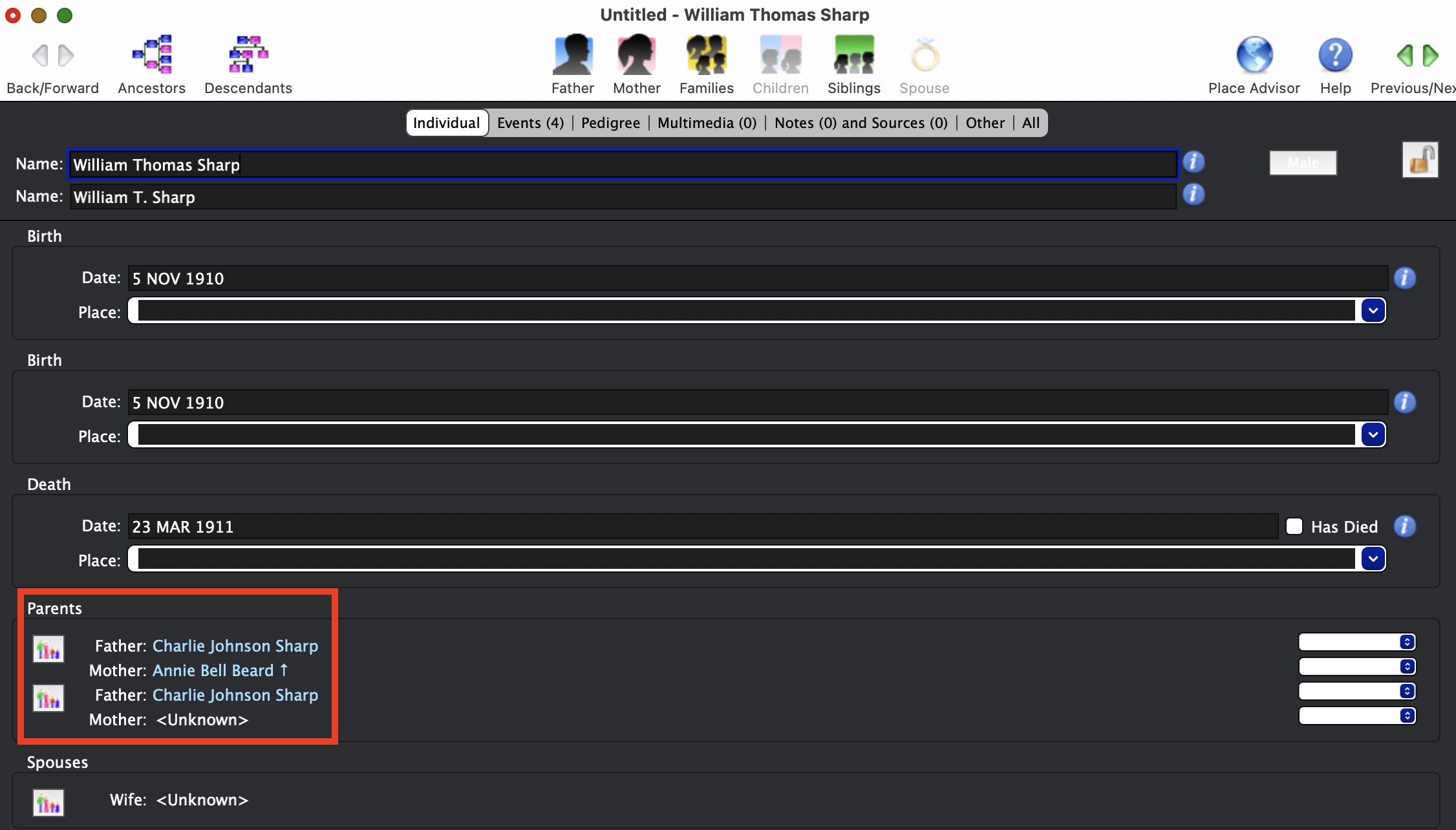
Rectifying Errors:
It is crucial to address errors in the original data source rather than correcting them directly within the GEDCOM file. For example, if using Ancestry.com, corrections should be made on the platform's website. Failing to do so may result in persistent inaccuracies in subsequent GEDCOM exports and shared family trees.
Conclusion:
Accurate representation of parental data is paramount in genetic genealogy research. By adhering to these guidelines and promptly addressing flagged instances, you can maintain the integrity of your family tree and ensure that your research reflects accurate biological relationships.
See also: How to find and correct people without a proper gender in your GEDCOM file